¶ Virtual Key Setup
To enable FlexCharging to manage charging for your Tesla vehicle, you may need to set up a "Virtual Key." This one-time process grants FlexCharging the necessary permissions to control charging on your behalf. This guide walks you through the steps to create and assign a Virtual Key for your Tesla vehicle.
Key points:
- A separate Virtual Key is required for each Tesla vehicle.
- Virtual keys are required for all Model 3: Instructions
- Virtual keys are required for all Model Y: Instructions
- Virtual keys are required for 2021+ Model S: Instructions
- Virtual keys are required for 2021+ Model X: Instructions
- Virtual keys are required for 2023+ Cybertruck: Instructions
- The setup process only needs to be completed once per vehicle.
- You retain full control and can revoke FlexCharging's access at any time.
- Virtual Key status can be checked at any time from the Tesla infotainment screen under Settings, Locks.
Note : Setting up a phone key may require being physically near your Tesla.
¶ Virtual Key Instructions - Updated July 31, 2026
There are three steps for Tesla drivers:
- Enable phone-as-key. (Many will have already done this.)
- Sign in with Smartcar to grant access to Smartcar.
- Run the Tesla app on your phone, confirm allowing third party app access.
- This also creates a virtual key for Smartcar to allow it to send commands to your car.
Note that third party app access is not the same as a Tesla virtual key. However, the enable third party app access in the Tesla app will also create a virtual key, if asked by the API calling it (ie, Smartcar). But, the Tesla virtual key and the third party app access can be independently revoked by the user.
- Enable phone-as-key, if needed.
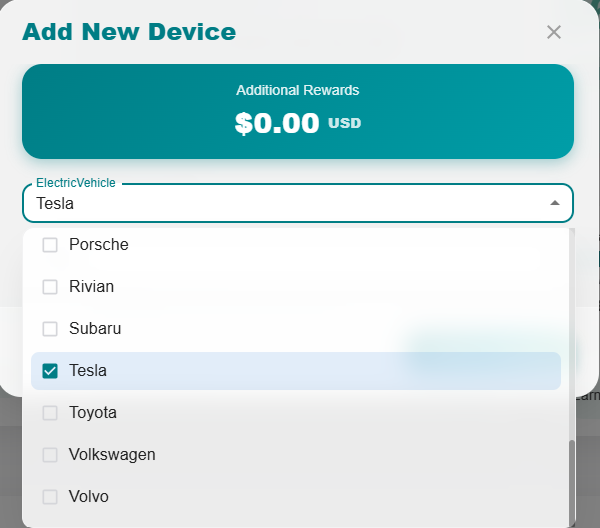
- Log into the FlexEnergi customer dashboard, add a device, then in the EV category, pick Tesla.
 |
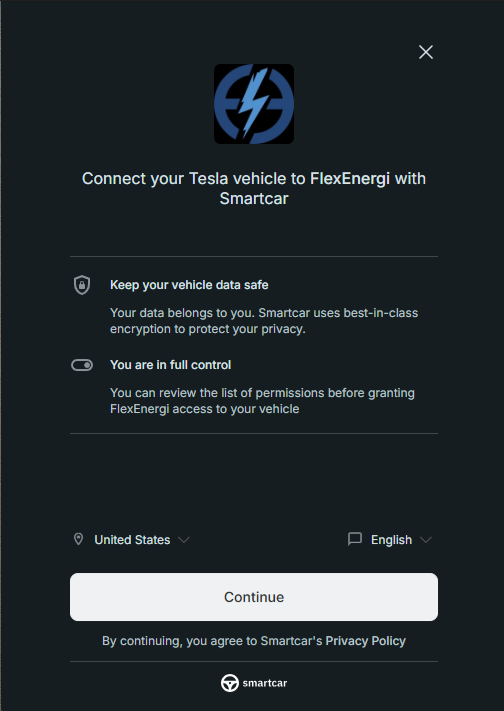 |
| Click “Connect Devices” – This starts the Smartcar connect workflow | |
 |
 |
 |
|
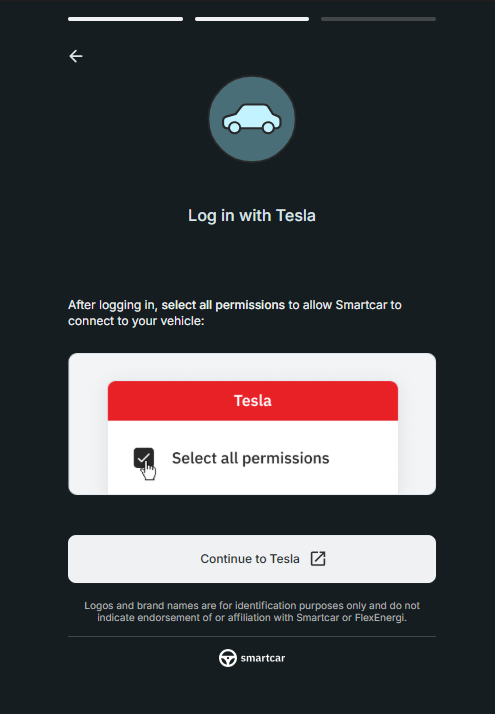
This navigates to Tesla.com, where you enter in your name and password. This is an Auth2 authentication dialog box. FlexEnergi does not get to see either your user name nor your password. |
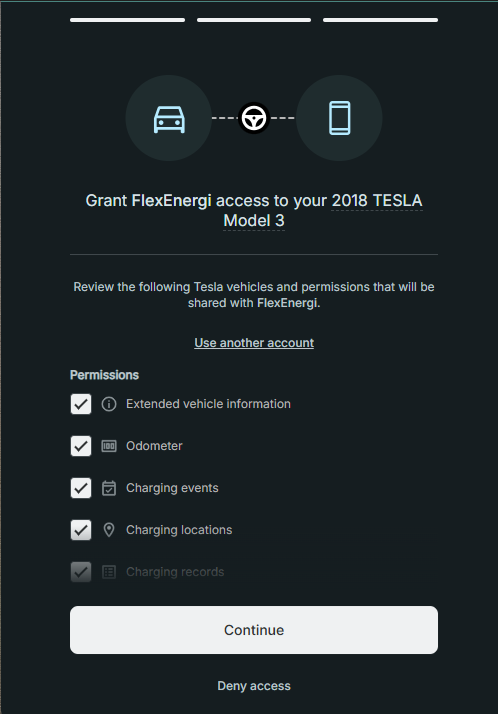
After going through the Tesla process, the Smartcar connect workflow resumes: Select all permissions and press Continue. Now a Tesla virtual key must be set up. |
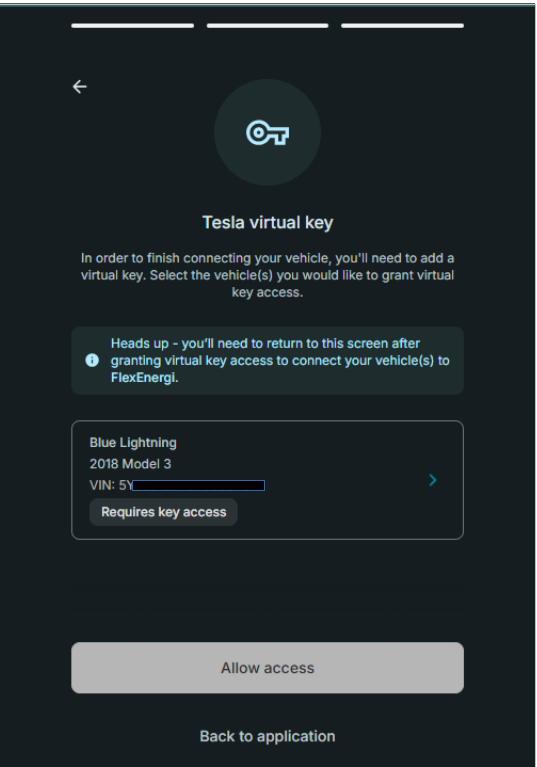
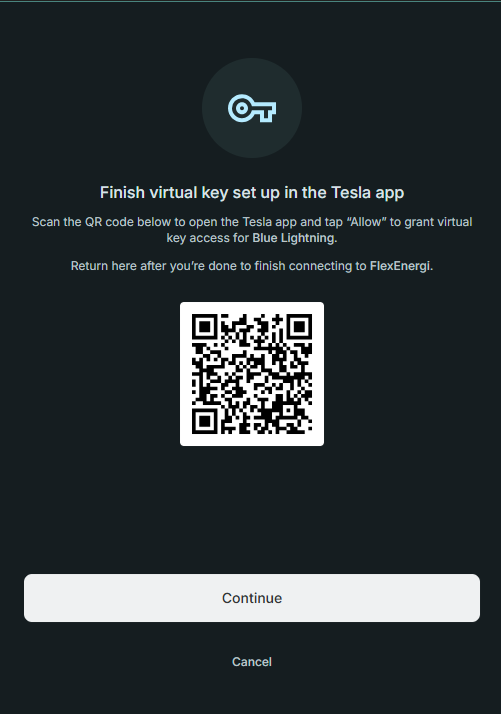
Smartcar will show this in their connect workflow. Click the vehicle you are interested in granting access to. Smartcar will display a QR code to scan: |
 |
 |
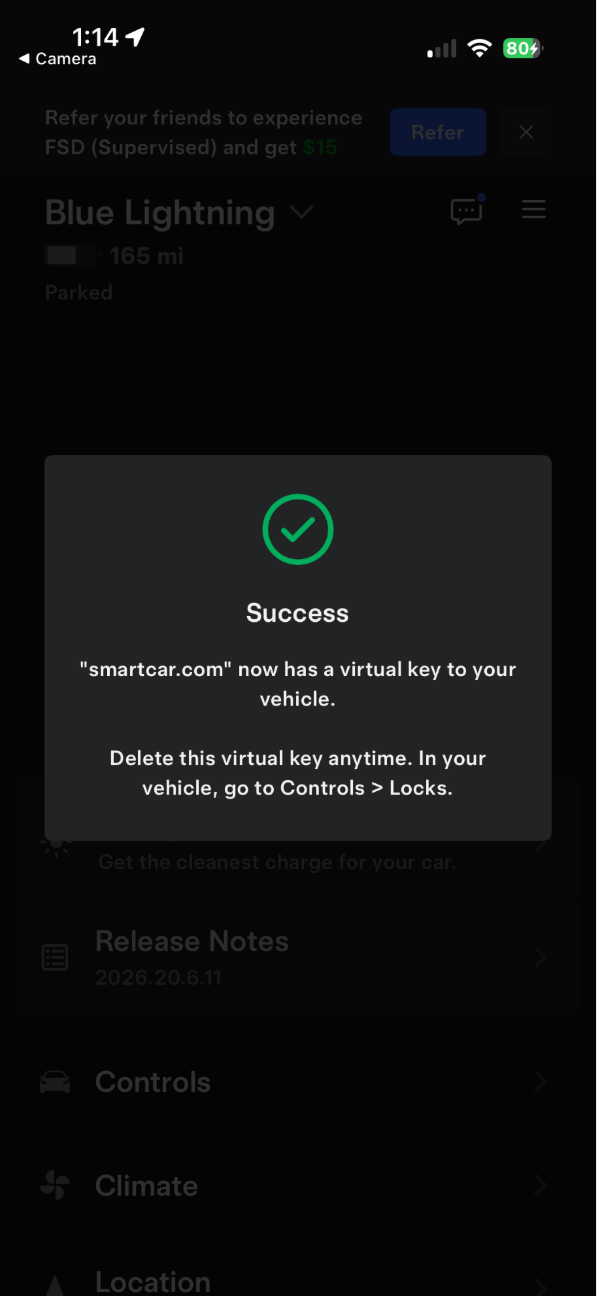 |
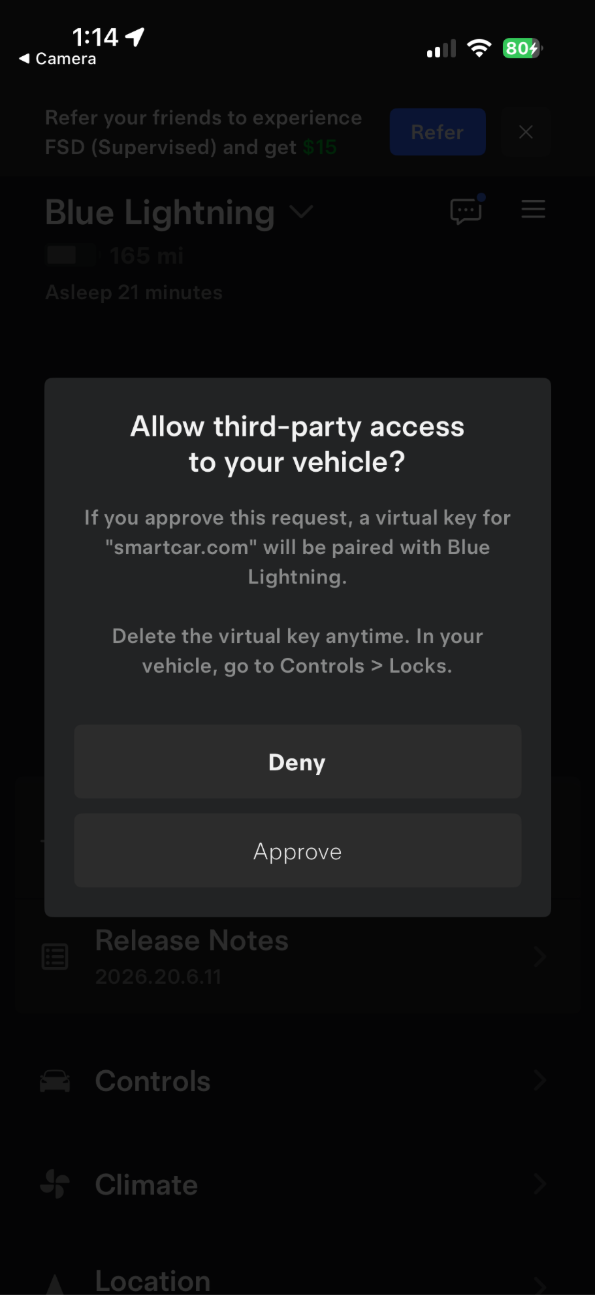
| Scanning that QR code on your phone will launch the Tesla app, asking it to grant third party app access to FlexEnergi via Smartcar. This also creates a Tesla virtual key in your car. | ||
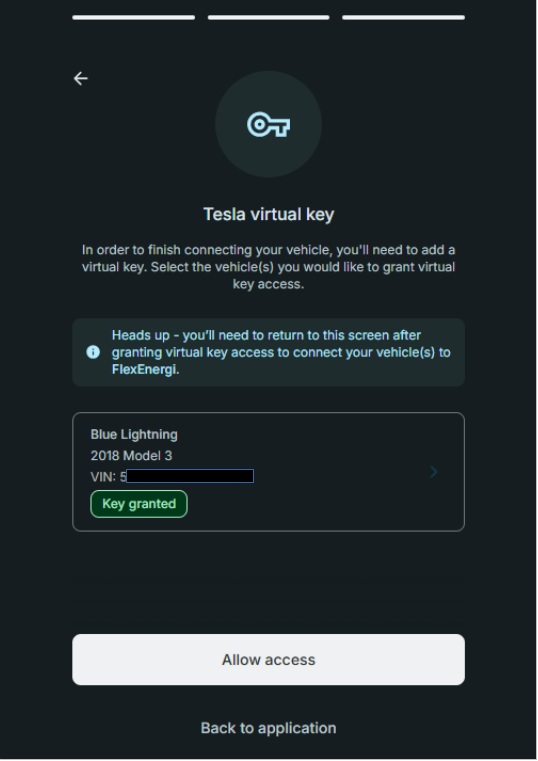 |
Now return back to the Smartcar connect workflow. Once you click on Allow Access, that should let Smartcar’s connect workflow finish. That dialog will go away. You may still need to click a Link Devices button in the FlexEnergi customer dashboard. |
¶ Verifying what's going on
There are two things a driver can see to verify this is signed up correctly.
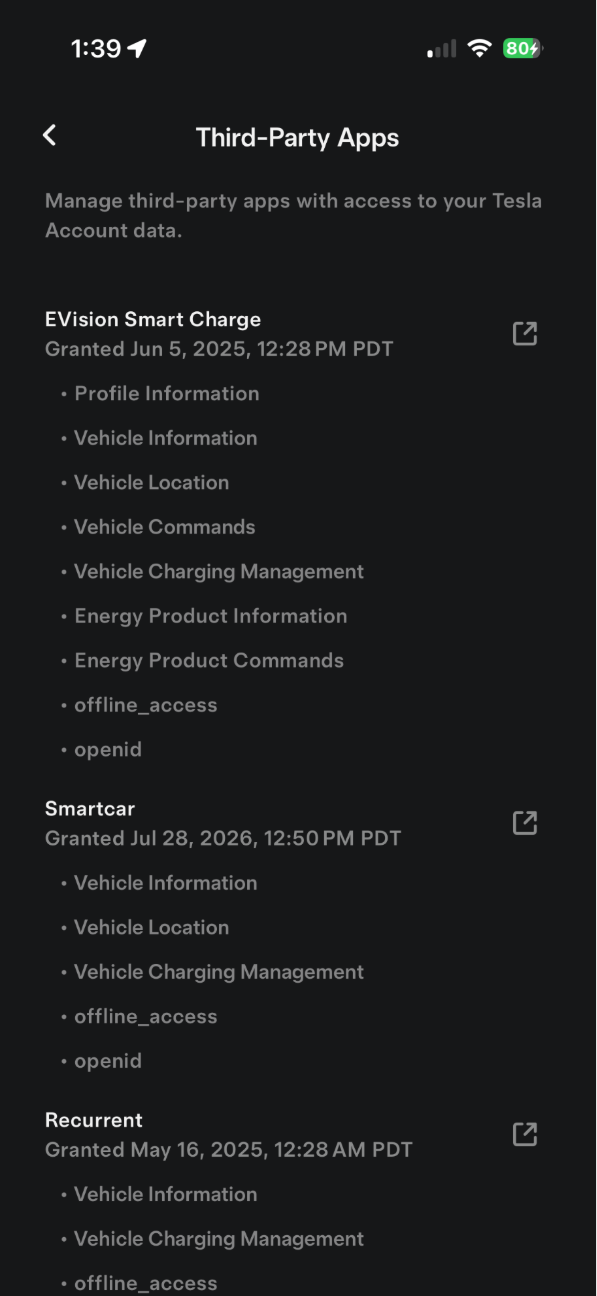
- In the Tesla app, look at third party app access.
- In your vehicle’s dashboard, click Controls -> Locks then look for a virtual key for Smartcar.
Drivers generally do not need to do this process. FlexEnergi needs to verify this with our own vehicles.
¶ Third-party Apps Access
|
The Tesla app shows third party access in a buried way.
|
 |
¶ Tesla Virtual Key Access
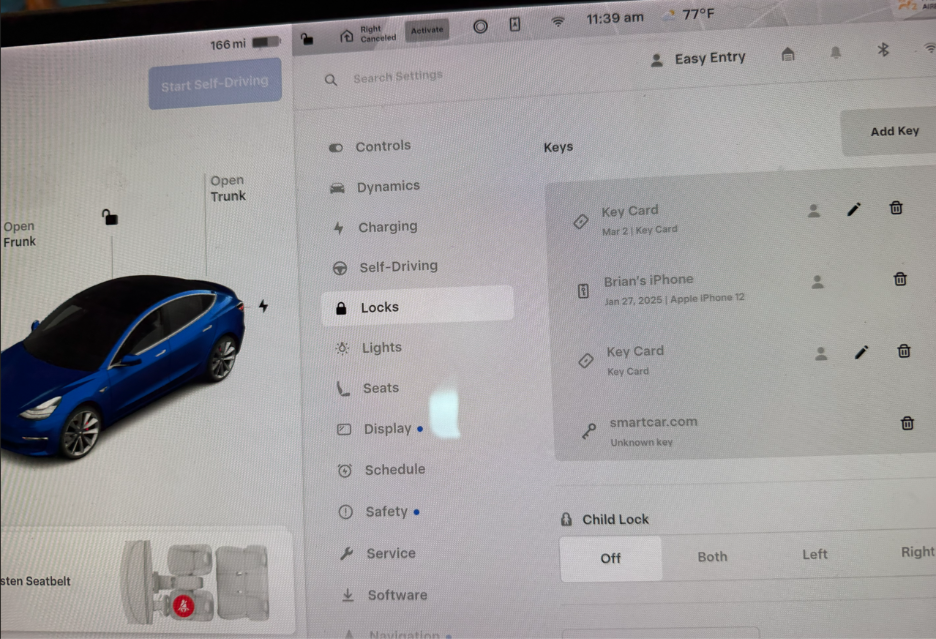 |
This is necessary to send commands to the car, such as start and stop charging.
|
¶ FAQ
If my users have more than one Tesla on their account, will they need to add the virtual key to all of their vehicles?
- Yes. You will need to add our virtual key to each vehicle on the Tesla account.
Does the user need to be next to vehicle when adding a virtual key?
- Owner accounts can add a virtual key remotely.
- Driver accounts need to be in bluetooth range in order to add a virtual key
Why are my users are seeing a location sharing notification on their navigation unit?
- With the recent changes to data access, vehicles will transmit their live location if your application has requested access to location data. This notification was put in place by Tesla to ensure transparency for owners about what data is being shared and with whom.